The process
How animal export works
Eight steps between your first email and your animals landing. We run all of them — and a mistake at any one stops the shipment.
Where the time goes
Select a stage · roughly 73 days end to end
1.Permit & feasibility
About 2 weeks
We confirm the destination protocol is currently open for your species and that the importer holds a permit. The permit determines the test panel and the isolation period, so nothing else can be scheduled until it exists.
A representative export. Actual timings vary by destination protocol — the 30-day isolation period is the one figure that rarely moves.
Before the flight
Most of the calendar lives here. None of it can be rushed by paying more.
- 01
Feasibility review
We confirm the destination protocol is open for your species and give you a realistic timeline and cost in writing. Free, and usually back within a day or two.
- 02
Pickup and pre-export isolation
We arrange pickup from the origin farm and delivery to a USDA-approved pre-export isolation facility.
- 03
Testing
Testing runs to the destination country's import protocol. The panel and the isolation period are set by the importing country, not by us.
- 04
Health certification
A USDA-accredited veterinarian monitors the animals through isolation and prepares the International Health Certificate.
- 05
USDA endorsement
USDA APHIS endorses the certificate. Nothing flies until it does.
Flight day
The part everyone pictures, and the shortest part of the job.
- 06
Scheduling and preparation
We book the shipping date with the airline and prepare the animals, scheduling backwards from the date they need to arrive.
- 07
Vanning and loading
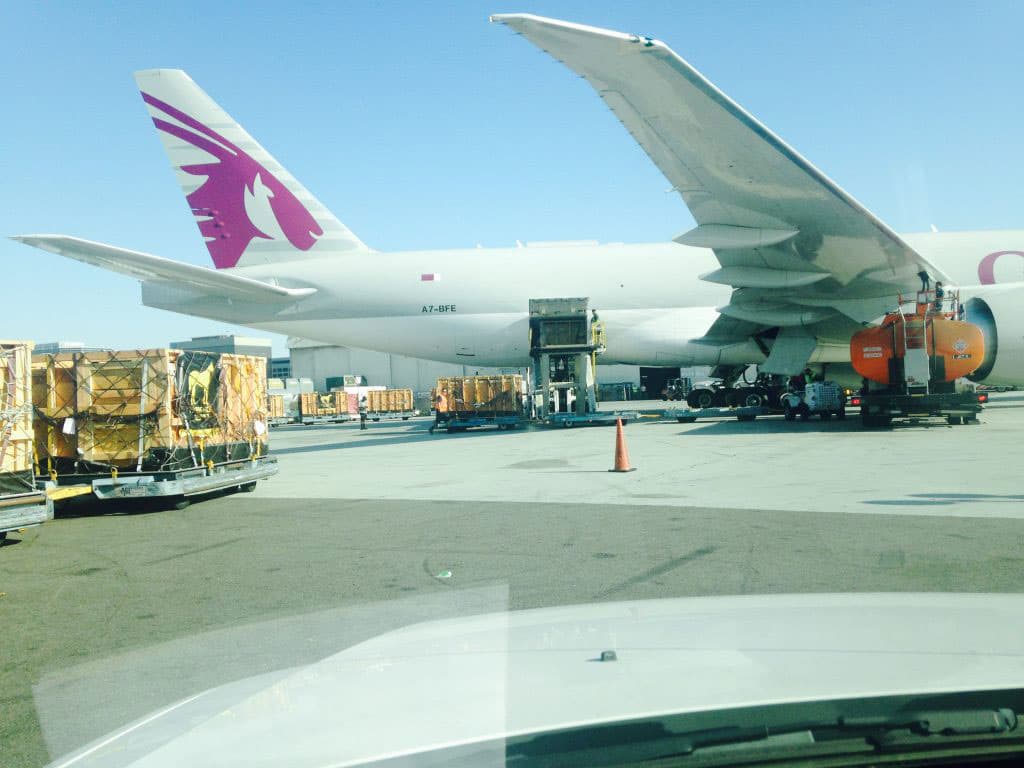
Animals are vanned to the airport and loaded into air stables or crates we build ourselves. Every airline handling crew is briefed beforehand, because loading is where avoidable stress happens.
In the air and on arrival
Someone experienced stays with the animals the whole way.
- 08
Grooms fly with the animals
Professional grooms travel with the shipment, keeping animals hydrated and fed for the whole sector, then handle the offload and coordinate quarantine at the destination.
What you should expect
Before you book anything.
The timeline is not negotiable
Isolation periods, test panels and quarantine capacity are set by the importing authority. Paying more does not shorten them. What good planning buys you is certainty on the date, not a sooner one.
The permit comes before everything
Most delays we see started as a shipment scheduled before the importer had a permit in hand. The permit determines the test panel, so the isolation clock cannot start until it exists.
Group shipments cost far less per head
A single horse travelling alone carries the whole air stable. Three horses sharing one split the cost three ways. If your timing is flexible, tell us — we can often consolidate.
What it costs
Real ranges, from real shipments.
Every shipment is still priced individually — species, destination protocol, crate configuration and season all move the number. These ranges are drawn from completed jobs, not a rate card, so treat them as a starting point rather than a quote.
A single horse
$13,000 – $25,000
Covers air freight, pre-export isolation, blood tests, USDA inspection and fees, and a groom flying with the horse. Ground transport to quarantine is billed separately — real shipments have landed closer to $16,000–$17,000 all-in once that's added.
Horses shipped as a group
materially less per head
A single horse carries the whole air stable. Three sharing one split the cost three ways — the single biggest lever on price.
Breeding cattle
around $5,000 per head
Consistent across the group shipments we've run. Quoted per head on a group consignment — small numbers cost proportionally more.
Miniature horses and ponies
around $4,000 per head
Usually moved alongside full-size horses on the same consignment rather than shipped alone.
Exotic and zoo species
quoted case by case
Driven by crating, CITES and wildlife permitting more than by the flight itself. Mixed-exotic consignments have run well into six figures.
A quote normally covers
- Air freight
- 30-day pre-export isolation quarantine
- Blood tests and swabs
- 5-hour rest and USDA inspection
- USDA user fees
- Professional groom, including their flight
Billed separately
- Farm board before quarantine begins
- Road transport from the origin farm to quarantine
- Farrier and routine veterinary work
- Destination-country quarantine and customs charges
Group shipments cost materially less per head than one animal travelling alone — a single horse carries a whole air stable, three sharing one split it three ways. If your timing is flexible, say so and we will look at consolidating.
FAQ
Process questions
How much does it cost to export a horse or livestock from the USA?
A single horse typically runs $13,000 to $25,000, covering air freight, pre-export isolation, blood tests, USDA inspection and fees, and a groom on the flight — ground transport to quarantine is extra. Breeding cattle run around $5,000 a head on a group consignment, and miniature horses around $4,000. Group shipments cost materially less per head than one animal travelling alone. Exotic and zoo species are quoted case by case and can run well into six figures for a large mixed consignment. Every figure above is a real range from completed shipments, not a rate card, so treat it as a starting point and request a written quote for your actual move.
How long does an animal export take from start to finish?
Typically 60 to 120 days, and 90 to 150 days for China, Australia and New Zealand. Very little of that is flying. The time goes into import permits, the pre-export isolation period, the destination test panel and USDA endorsement — none of which can be accelerated by paying more.
What is pre-export isolation, and why is it required?
It is a period during which the animals are held at a USDA-approved facility, separated from other stock, while a USDA-accredited veterinarian completes the destination country's test panel. The importing country requires it so that the health certificate reflects animals that have been under supervision, not just examined once.
Who issues the health certificate?
A USDA-accredited veterinarian prepares the International Health Certificate, and USDA APHIS endorses it. The endorsement is what makes the certificate valid for export — animals cannot travel without it.
Do animals travel in the cargo hold?
They travel on the main deck of a freighter or a combi aircraft, in air stables for horses and purpose-built crates for livestock and exotics. The main deck is pressurised and temperature-controlled, and grooms are aboard with the animals.
What happens if a test comes back positive during isolation?
It depends on the test and the protocol. Some findings mean retesting and a delay; some mean the animal cannot travel on that protocol. This is exactly why the feasibility review looks at health status upfront — a surprise at day 25 of isolation is expensive.
Can you handle the destination end as well?
Yes. Our grooms handle the offload and assist with loading into trailers, and we coordinate post-arrival quarantine with agents at the receiving end. We stay involved through arrival rather than handing off at the departure airport.